
Imagination, Interdependence, and Liberation. Practicing Yogacara Buddhism with Vasubandhu’s Three Natures
by Ben Connelly
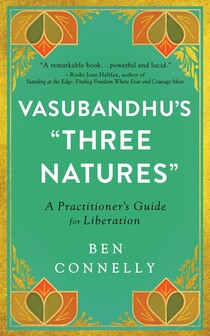
Ben's newest book!
Imagination, Interdependence, and Liberation. Practicing Yogacara Buddhism with Vasubandhu’s Three Natures
Simon & Schuster, November 2022.
Click here to watch a video of Ben talking about this book.
https://www.youtube.com/watch?v=dBK5k17eYDw
Dive into this empowering approach to freedom from suffering and from harmful personal and social patterns—and find peace and joyfulness in the present.
In his new book, Vasubandhu’s “Three Natures,” a plain-English commentary, Ben Connelly shows the power of integrating early Buddhist psychology with the Mahāyāna emphasis on collective liberation. You’ll discover how wisdom from fourth-century India can be harnessed to heal and transform systems of harm within ourselves and our communities.
You can find the book here:
https://www.simonandschuster.com/books/Vasubandhus-Three-Natures/Ben-Connelly/9781614297536
Comments about the book:
"A remarkable book . . . powerful and lucid."
-Roshi Joan Halifax, founding abbot, Upaya Zen Center
"Inspiring…opens many doors to personal and social transformation, sorely needed."
-Dr. Larry Ward, author of America’s Racial Karma
“Connelly’s insightful and often moving commentary displays the profound relevance of Vasubandhu’s Yogācāra philosophy both to personal practice and to the wider social world.”
-Jonathan Gold, Professor of Religion, Princeton University
“...shows us how to understand and embody the mystery of Vasubandhu’s teachings without getting lost in esoterica and spiritual bypassing.”
-Pamela Ayo Yetunde, Th.D. Co-editor, Black and Buddhist
“Beautifully written, it fuses lucid explanations of often difficult Yogacara ideas with attention to everyday concerns in a way that can help all of us apply Buddhist wisdom to the lives we live in the twenty-first century.”
Roger R. Jackson, author of Mind Seeing Mind and Rebirth
“...a rare and welcome combination of scholarship and insight born of deep study and practice. The goal of human flourishing and freedom from suffering is at the center of his exposition of every verse.”
-Anantanand Rambachan Author of A Hindu Theology of Liberation
Book Tour 2023
Ben Connelly will be traveling mountain states and the west coast in April and May to talk about his newest book Vasubandhu's "Three Natures". Let your friends know he's coming!
April 15, Boulder Zen Center, Boulder, CO
April 16, Prairie Mountain Zen, Longmont, CO
April 19, Wet Mountain Zen, Pueblo CO
April 21 Zen Desert Sangha and Sky Island Zen, Tucson, AZ
April 23, Zen Center Los Angeles, LA, CA
April 24 Angel City Zen. LA, CA
April 25 Dharma Bum Temple, San Diego, CA
April 26 Wilshire Boulevard Temple, LA, CA
April 27 Santa Barbara Zen Center, Los Olivos, CA
April 29 San Francisco Zen Center, San Francisco, CA (dharma talk and workshop)
April 30-May 5, Tassajara Zen Mountain Center, CA (residents only)
May 6, Berkeley Zen Center, Berkeley, CA
May 7, Monterey Bay Zen Center, Monterey, CA
May 9, Bamboo in the Wind, Sunnyvale, CA
May 10 Santa Cruz Zen Center, Santa Cruz, CA
May 11-14, Jikoji, Santa Cruz Mountains, CA (sesshin)
May 16, Buddha Eye Temple, Eugene, OR
May 17, Dharma Rain Zen Center, Portland, OR
May 18, Red Cedar Zen, Bellingham, WA
May 20 Open Way Sangha, Missoula, MT
Mindfulness and Intimacy by Ben Connelly
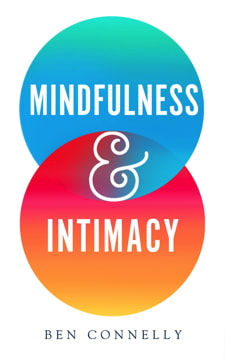
Wisdom Publications, February 2019
Go beyond mere mindfulness—and deepen your connection to your self, the people in your life, and the world around you.
Mindfulness is an ancient and powerful practice of awareness and nonjudgmental discernment that can help us ground ourselves in the present moment, with the world and our lives just as they are. But there's a risk: by focusing our attention on something (or someone), we might always see it as something other, as separate from ourselves. To close this distance, mindfulness has traditionally been paired with a focus on intimacy, community, and interdependence. In this book, Ben Connelly shows us how to bring these two practices together—bringing warm hearts to our clear seeing.
Helpful meditations and exercises show how mindfulness and intimacy can together enrich our empathetic engagement with ourselves and the world around us—with our values, with the environment, and with the people in our lives, in all their distinct manifestations of race and religion, sexuality and gender, culture and class—and lead to a truly engaged, compassionate, and joy-filled life.
Earlier Books
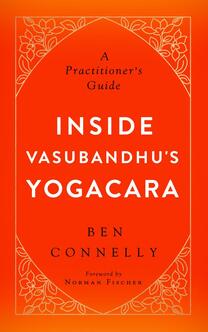
Inside Vasubandhu's Yogacara: A Practitioner's Guide by Ben Connelly
|
Inside Vasubandhu's Yogacara by Ben ConnellyInside Vasubandhu's Yogacara: A Practitioner's Guide
Wisdom Publications, December 2016, Foreward by Norman Fischer A practical guide to Vasubandhu's classic work "Thirty Verses of Consciousness Only" that can transform modern life and change how you see the world. |
In this down-to-earth book, Ben Connelly sure-handedly guides us through the intricacies of Yogacara and the richness of the "Thirty Verses." Dedicating a chapter of the book to each line of the poem, he lets us thoroughly lose ourselves in its depths. His warm and wise voice unpacks and contextualizes its wisdom, showing us how we can apply its ancient insights to our own modern lives, to create a life of engaged peace, harmony, compassion, and joy.
In fourth-century India one of the great geniuses of Buddhism, Vasubandhu, sought to reconcile the diverse ideas and forms of Buddhism practiced at the time and demonstrate how they could be effectively integrated into a single system. This was the Yogacara movement, and it continues to have great influence in modern Tibetan and Zen Buddhism. "Thirty Verses on Consciousness Only," or "Trimshika," is the most concise, comprehensive, and accessible work by this revered figure.
Vasubandhu's "Thirty Verses" lay out a path of practice that integrates the most powerful of Buddhism's psychological and mystical possibilities: Early Buddhism's practices for shedding afflictive emotional habit and the Mahayana emphasis on shedding divisive concepts, the path of individual liberation and the path of freeing all beings, the path to nirvana and the path of enlightenment as the very ground of being right now. Although Yogacara has a reputation for being extremely complex, the "Thirty Verses" distills the principles of these traditions to their most practical forms, and this book follows that sense of focus; it goes to the heart of the matter—how do we alleviate suffering through shedding our emotional knots and our sense of alienation?
This is a great introduction to a philosophy, a master, and a work whose influence reverberates throughout modern Buddhism.
Read a review in Publishers Weekly.
In fourth-century India one of the great geniuses of Buddhism, Vasubandhu, sought to reconcile the diverse ideas and forms of Buddhism practiced at the time and demonstrate how they could be effectively integrated into a single system. This was the Yogacara movement, and it continues to have great influence in modern Tibetan and Zen Buddhism. "Thirty Verses on Consciousness Only," or "Trimshika," is the most concise, comprehensive, and accessible work by this revered figure.
Vasubandhu's "Thirty Verses" lay out a path of practice that integrates the most powerful of Buddhism's psychological and mystical possibilities: Early Buddhism's practices for shedding afflictive emotional habit and the Mahayana emphasis on shedding divisive concepts, the path of individual liberation and the path of freeing all beings, the path to nirvana and the path of enlightenment as the very ground of being right now. Although Yogacara has a reputation for being extremely complex, the "Thirty Verses" distills the principles of these traditions to their most practical forms, and this book follows that sense of focus; it goes to the heart of the matter—how do we alleviate suffering through shedding our emotional knots and our sense of alienation?
This is a great introduction to a philosophy, a master, and a work whose influence reverberates throughout modern Buddhism.
Read a review in Publishers Weekly.
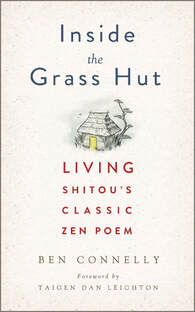
INSIDE THE GRASS HUT: LIVING SHITOU'S CLASSIC POEM BY BEN CONNELLY
|
Inside the Grass Hut: Living Shitou's Classic Poem
Wisdom Publications, July 2014, Foreward by Taigen Dan Leighton Enter the mind and practice of Zen: apply the insights of one of Zen's classic poems to your life — here and now. Shitou Xiqian's Song of the Grass Roof Hermitage is a remarkably accessible work of profound depth; in thirty-two lines Shitou expresses the breadth of the entire Buddhist tradition with simple, vivid imagery. |
Ben Connelly's Inside the Grass Hut unpacks the timeless poem and applies it to contemporary life. His book delivers a wealth of information on the context and content of this eighth-century work, as well as directly evokes the poem's themes of simple living, calm, and a deep sense of connection to all things. This is destined to become a trusted, dog-eared companion.